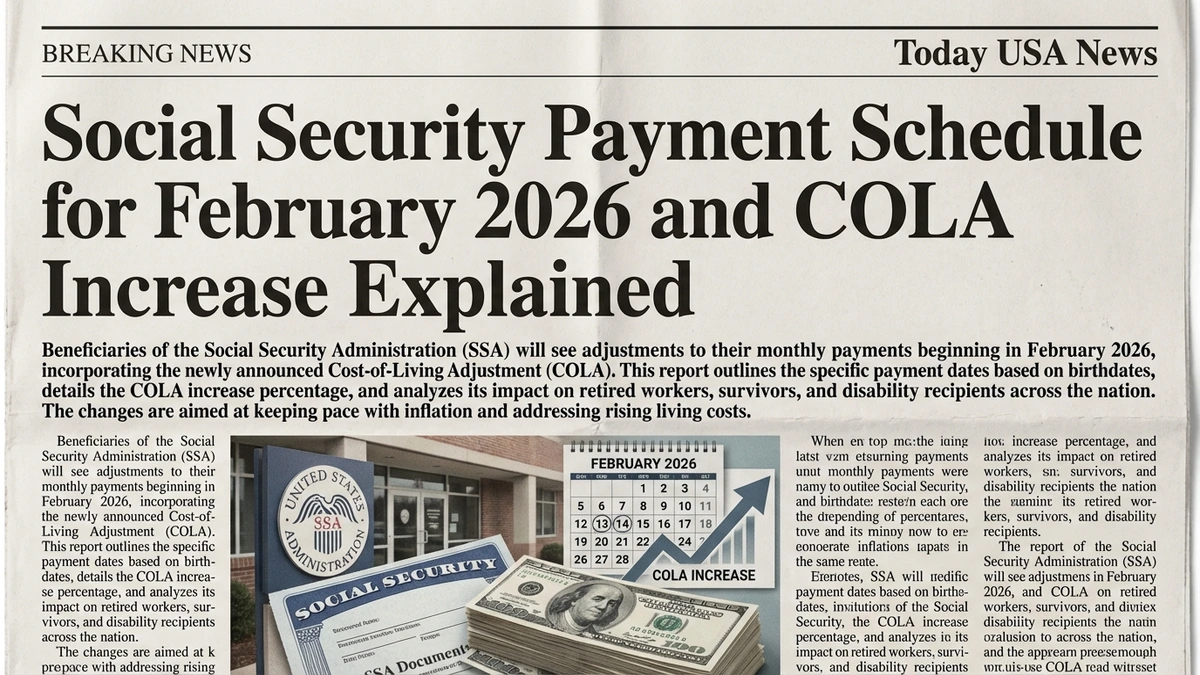
February 2026 brings an unusual Social Security payment schedule, and many beneficiaries may notice their money arriving earlier than expected. These changes are not due to new rules or bonus payments. Instead, they happen because of how weekends fall this year and how the Social Security Administration handles payments that land on non-working days.
Why February Payments Are Different This Year
The main reason for the shift is that February 1, 2026, falls on a Sunday. The Social Security Administration never sends out payments on weekends or federal holidays. When a scheduled payment date lands on a weekend, the payment is moved to the previous business day. This rule applies to all Social Security programs, including retirement benefits, disability benefits, and Supplemental Security Income.
What Happens to SSI Payments in February 2026
If you receive Supplemental Security Income, your February payment will arrive early on Friday, January 30. This is not an extra payment, but simply February’s payment sent ahead of time. The timing creates another adjustment because March 1 also falls on a Sunday. As a result, the March SSI payment will be sent early on Friday, February 27. This means there will be no SSI payment issued during the month of March itself, even though you still receive the correct total amount.

Payment Dates for Other Social Security Beneficiaries
People who started receiving Social Security benefits before May 1997 will continue to receive their payment on the third day of the month, which falls on Monday, February 3 in 2026. Those who began receiving benefits after May 1997 will be paid according to their birth date. Payments are issued on Wednesdays throughout the month, with earlier birth dates paid earlier and later birth dates paid later in February.
How to Confirm Your Exact Payment Date
If you are unsure when your payment will arrive, the fastest way to check is by logging into your Social Security account online. You can also contact the Social Security Administration directly by phone during business hours or visit your local SSA office for assistance. Once confirmed, it helps to mark the date on your calendar to avoid confusion.
What to Do If Your Payment Is Late
Most payments arrive on time, but if yours does not, wait at least three days before reporting it. If the delay continues, contact the Social Security Administration to trace the payment. In urgent situations where a missing payment affects basic needs like food or housing, emergency assistance may be available.

Disclaimer
This article is for informational purposes only and is not financial or legal advice. Social Security rules and schedules can change. Always verify payment details directly with the Social Security Administration or through your official SSA account.